Refresh your spatial maps without re-authoring AR content

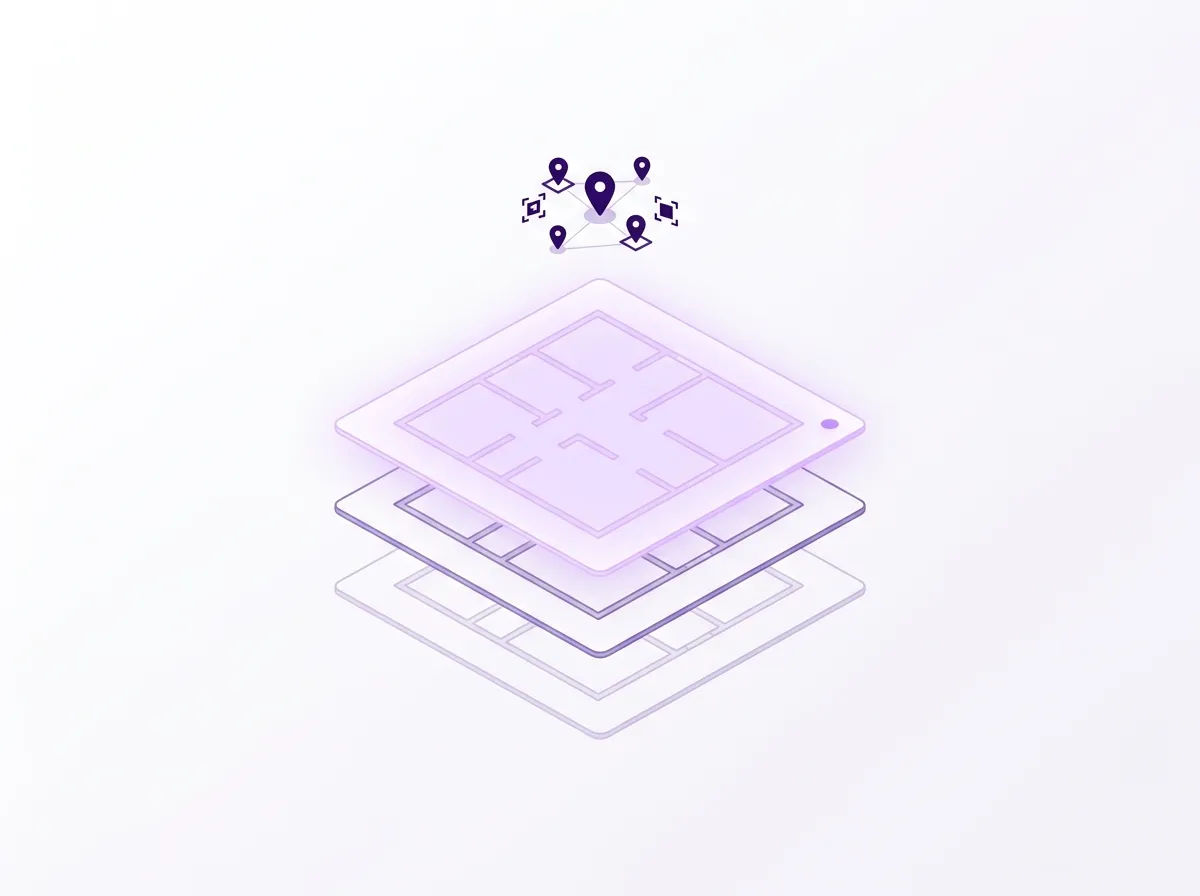
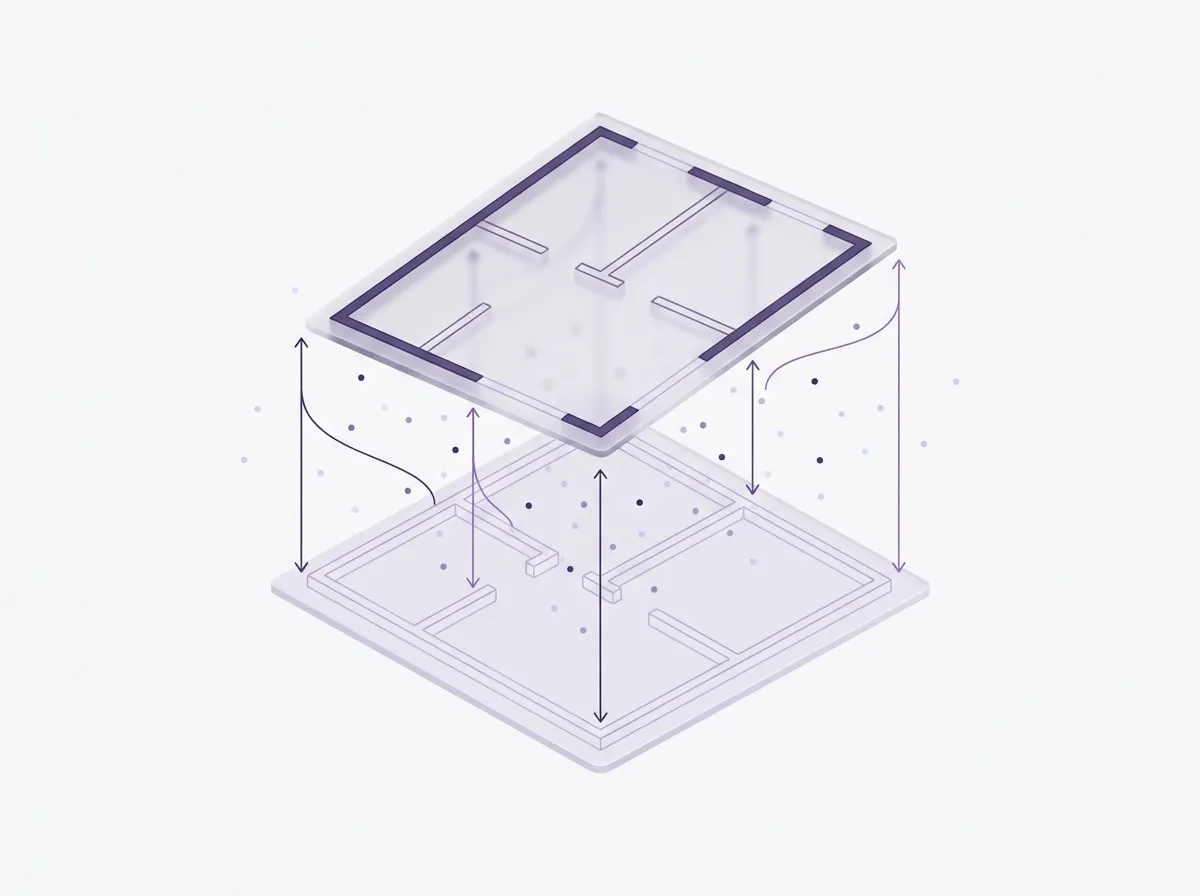
Map Versioning is the first VPS-native primitive that treats production spatial maps as living infrastructure. Re-scan when the facility changes. Mix iPhone, Insta360, Matterport, XGRIDs, NavVis and Leica captures in a single map. Anchors, AR work instructions, navigation paths and digital twin overlays stay in place across every version, automatically.

Why You Need Map Versioning

Until now, every enterprise spatial map has been a one-shot capture. Map Versioning makes them upgradeable infrastructure.

Decouple the content layer from the scan. Author AR anchors, annotations, navigation paths and overlays once. Refresh the map underneath as often as your facility actually changes.
Operate on the cadence the space demands. Daily, weekly, quarterly, on-event after a known reconfiguration. No SDK redeploys, no content migration tax.
Mix scanning hardware freely. Start with an iPhone capture today. Upgrade to a Leica scan next quarter. Drop in an Insta360 walk the month after. All in the same map version group.
Skip the re-authoring rebuild. No re-anchoring asset tags. No re-routing AR navigation. No re-aligning BIM overlays. The active version slides underneath; the content layer never moves.
Treat spatial maps as versioned infrastructure. Promotable active version. Stable base coordinate frame. Routine map operations instead of rebuild-the-world events.

Key Advantages

Decoupled Content Layer
Anchors, annotations, AR content, navigation paths and digital twin links live above the map, not inside it. Re-scan whenever the facility changes. No re-anchoring, no content migration, no production downtime.
VPS-Powered Alignment
Map Versioning computes the rigid transform between scans by reasoning about scene structure, not raw geometry, so alignment stays robust where ICP would diverge.
Hardware-Mix Versions
Map version history can include iPhone LiDAR, 360° video walks, Gaussian Spat, terrestrial and aerial scans. Choose the right capture device for each refresh; never lock into one.
Composes with MapSet
MapSet groups maps across space — floors, zones, indoor-to-outdoor transitions, campus-wide coverage. Map Versioning groups scans of the same area across time. Re-scan a single floor inside a MapSet without disturbing any other zone's alignment.

From Re-Scan to Live in Three Steps

Capture
Scan the changed area with any modality. MultiSet Mapper iOS, Insta360, Matterport, Leica, NavVis, Faro, XGRIDS. No need to match the original capture device or coordinate system.
Align
MultiSet VPS computes a clean rigid transform between the new scan and your active map. No manual fiducials, no ICP tuning, no human-in-the-loop alignment. Works across hardware, lighting, seasons and months apart.
Activate
Promote the new scan to active in one API call. VPS queries route silently to the active version and the returned pose snaps back into the base frame. The content layer never moves. Your deployment keeps shipping.
CAPABILITY
WITHOUT MAP VERSIONING
WITH MAP VERSIONING
Map updates
Re-scan from scratch, replace production map
Add a new scan to the existing map version group
Annotation layer
Re-author anchors, navigation paths and overlays every cycle
Native MapSet with stitching & seamless transitions across floors/areas
Re-scan hardware
Locked to original capture device for alignment
Any combination — iPhone, Insta360, Matterport, Leica, NavVis, Faro, XGRIDS
Scan alignment
Iterative Closest Point fails when geometry changes
VPS-powered rigid transform handles real-world change
Operating cadence
Quarterly or annual rebuilds
Daily, weekly, on-event — whatever the space demands
Coordinate continuity
Each new scan creates a fresh coordinate frame
Base map frame persists; content stays anchored
Production risk profile
Map updates are rebuild-the-world events
Map updates are routine operations
Fidelity upgrade path
New scan = new map = new content authoring cycle
Phone capture today, professional scanner next quarter — same map

Built for Continuous Operations

Three production patterns where versioned maps turn rebuild projects into routine operations.

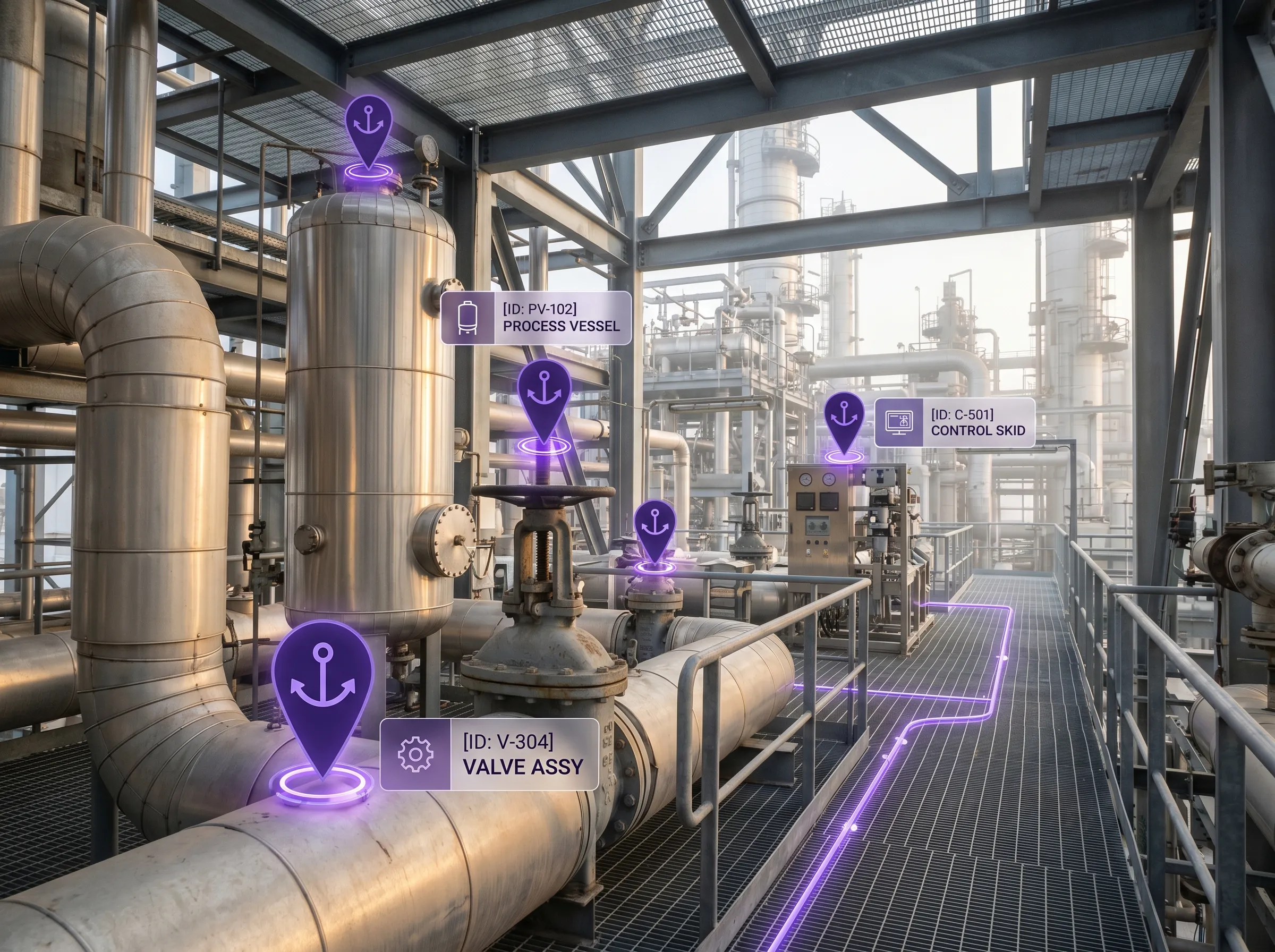
Factory interior with conveyor belts and floor markings indicating directed paths labeled 'QA Department' and 'Automated Guided Vehicle Zones'.

Keep the Digital Twin True to As-Is, Without the Rebuild Cost

Industrial sites, refineries and plants evolve constantly. Equipment relocates, pipework reroutes, sections undergo retrofit. Capture the changed area with a phone or 360° camera; professional scans follow on the regular survey cycle. CMMS-linked overlays, asset tags and maintenance routes stay anchored across every version. The twin stays as-is.
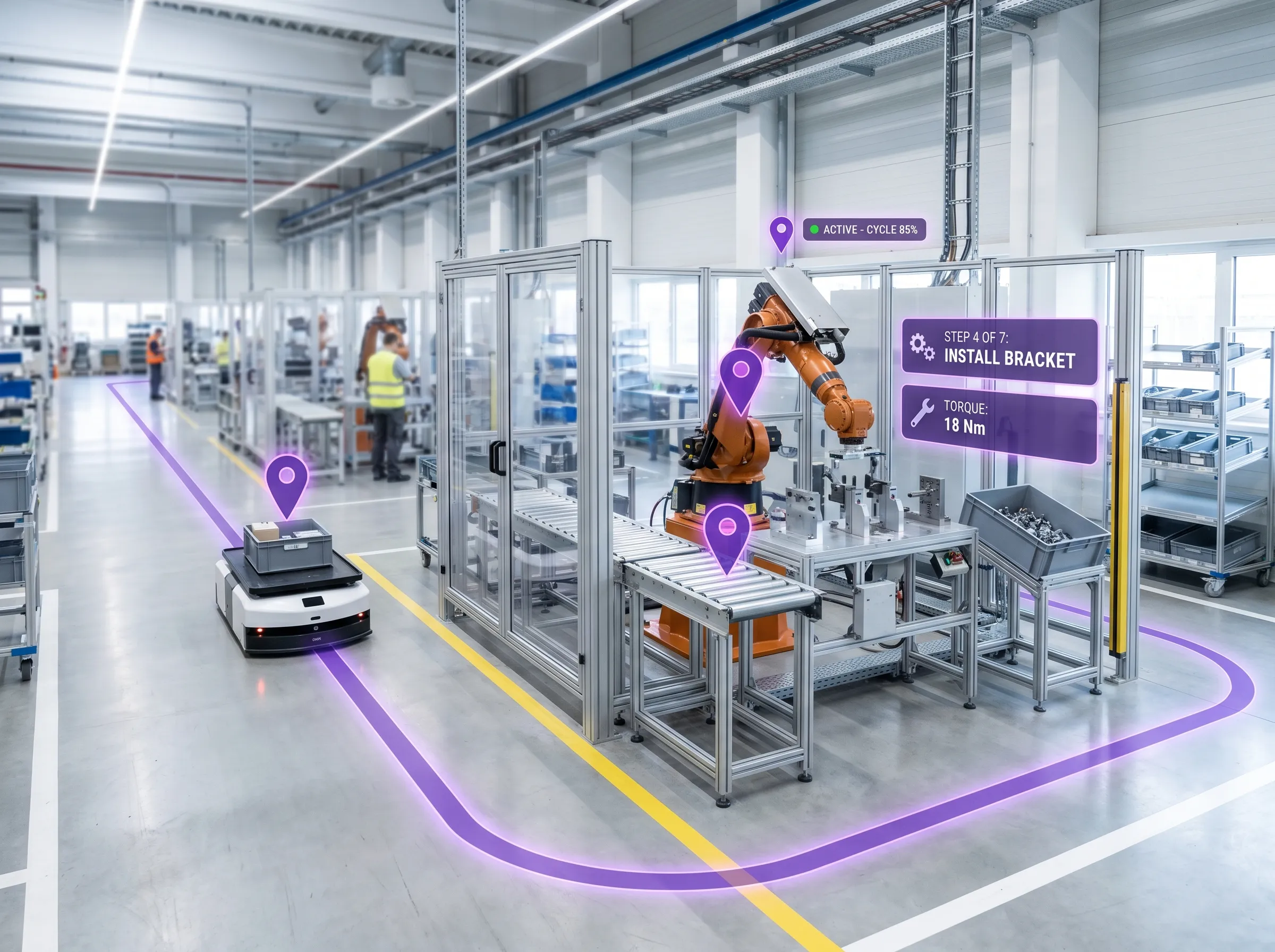
View through augmented reality goggles showing a factory floor with labeled sections: Electrical, HVAC, and M.V.C.

Re-Tool the Line. Keep the AR Workflow.

Lines reconfigure for new SKUs, cells get added, robots reposition. Re-scan the affected zone after each changeover; the new version slots into the same map. Operator AR instructions, AMR routes, quality inspection overlays and machine telemetry pins resolve against the same anchored coordinates. Line changeovers stop costing weeks of spatial rework.
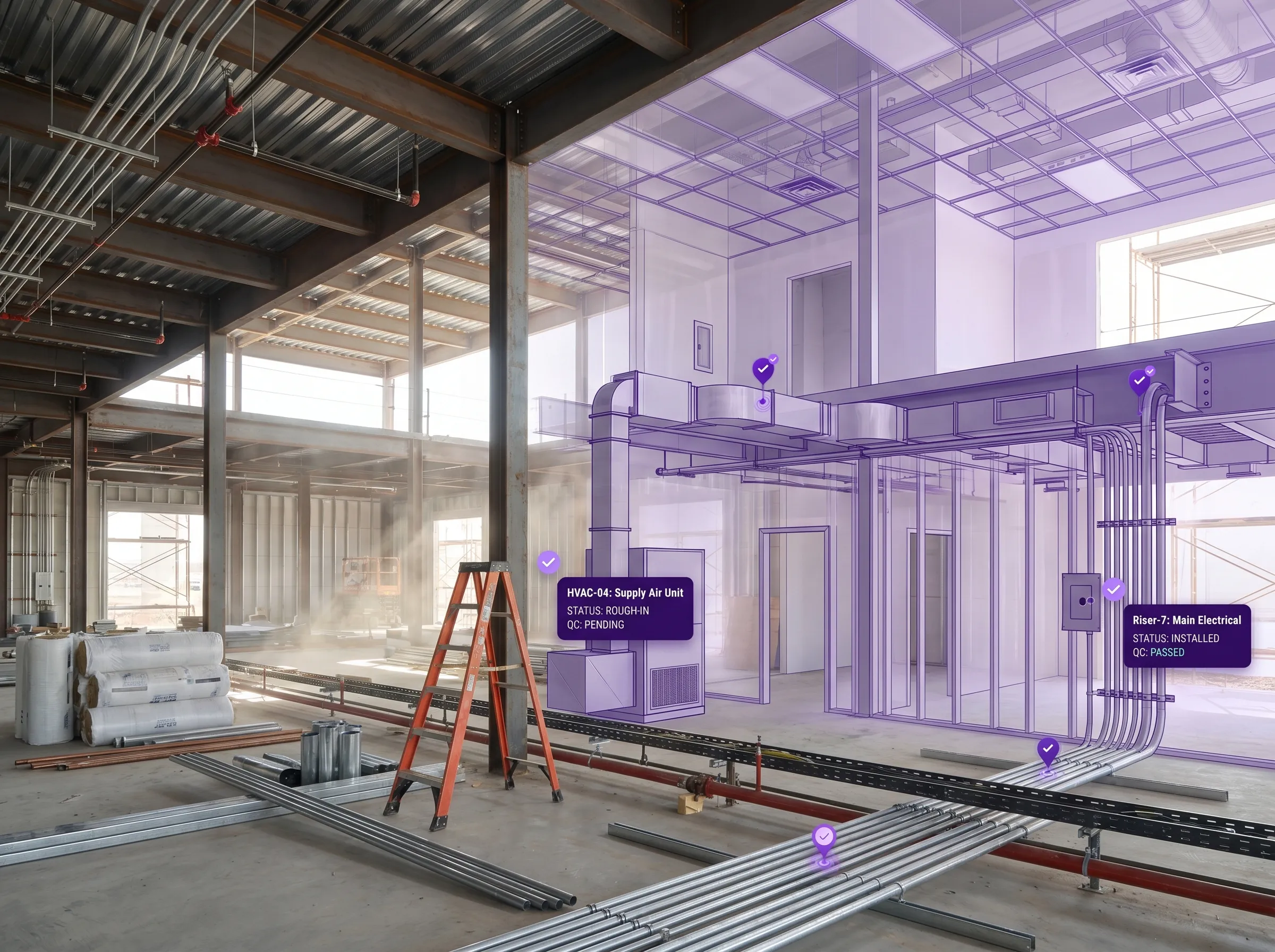
Industrial factory interior with pipes, machinery, and augmented reality data overlays labeling Heat Meter, Milling Machine, and Power Station.

One Map. Every Phase of the Build.

‍A construction project goes through more as-built states than any other environment — structural, mechanical, electrical, fit-out, handover. Each phase adds a new version aligned to the same base frame. BIM-to-as-built deltas surface against one coordinate system from groundbreaking to handover. The spatial record becomes a continuous asset, not a series of disconnected captures.

MapSet groups maps across space. Map Versioning groups maps across time. Same VPS, same coordinate system, same content layer.

Frequently asked questions
What is Map Versioning?

Map Versioning is a MultiSet VPS capability that lets you re-scan a facility over time and align each new scan to your existing map without re-authoring any AR content. Anchors, navigation paths, work instructions and digital twin overlays remain anchored to a single base coordinate frame across every version.

How does Map Versioning align two scans of the same space?

MultiSet's VPS computes a rigid transform between each new scan and your active map. The alignment works at the level of recognizable scene structure rather than raw geometry, which is why it stays robust under physical change, different hardware, different lighting, different sensor densities, and months between captures.

Why is this better than Iterative Closest Point (ICP) and other geometric matchers?

ICP only works when two scans look nearly identical. It breaks in exactly the cases that matter in production: rearranged furniture, swapped fixtures, different scanning hardware, different coordinate conventions, different lighting, time-separated captures. Map Versioning runs on the same VPS pipeline that powers MultiSet localization, so it stays accurate where ICP would diverge.

Can I mix different scanning hardware within the same map version?

Yes. iPhone LiDAR via the MultiSet Mapper app, Insta360 360° video, Matterport, Leica, NavVis, Faro and XGRIDS professional scanners can all be added to the same map version group. Start with a phone capture, upgrade to a professional scan next quarter. Vision Fusion normalizes every format into one map.

What happens to my AR content when I add a new version?

Nothing moves. Anchors, navigation paths, AR work instructions, training overlays and digital twin links all remain anchored to the base map's coordinate frame. VPS queries against the base map identifier are routed silently to the active version, and the returned pose is transformed back into the base frame.

How is Map Versioning different from MapSet?

MapSet groups maps that cover different physical areas of a venue — floors, zones, indoor-to-outdoor transitions, campus-wide coverage. Map Versioning groups scans of the same area captured over time. They compose: re-scan a single floor inside a MapSet without affecting any other floor's alignment.

How often should I re-scan a facility?

Whatever cadence the space actually demands. Some operators re-scan daily, some quarterly, some on-event after a known reconfiguration. There is no scheduled minimum, no SDK redeploy required, and no content migration cost per version.

What happens when the physical space changes significantly between scans?

Map Versioning is built for exactly this case. As long as enough structural context is shared between the active version and the new scan, the VPS computes a clean rigid transform. Each re-scan aligns against the currently active version rather than the original base, so alignment quality holds even as the space drifts further from the original capture over months and years.

Does Map Versioning work in every MultiSet deployment mode?

Yes. Public cloud, single-tenant private VPC, on-prem Kubernetes and air-gapped deployments. Same binary, same API surface, same versioning semantics across all four. Your spatial data stays where compliance demands.