Augmented Reality

Picture the moment when you hold up your phone, run a LiDAR sweep of a cozy workspace, and - before the espresso even cools - watch interactive hotspots spring to life on every desk. That is the promise of no code AR authoring, and it’s why a new wave of teams keeps searching phrases like ar prototyping tool, visual positioning proof of concept, and even test VPS in 10 minutes. They’re not hunting for theoretical white-papers; they’re hunting for a workflow that feels as direct as scribbling a sticky note.
MultiSet’s Content Space turns that hunt into a hands-on playground, combining an AR content CMS and iPhone Pro interface with friction-free mapping so anyone can move from “What if?” to “Look at this!” in a single coffee break.
“Wait - didn’t we green-light that AR demo last quarter?”
If that question sounds familiar, you’re not alone. Across industries, promising spatial-computing concepts quietly fade because the proof-of-concept stage takes too long. By the time a developer has stitched meshes, built a beta app, and passed the security checklist, the budget or enthusiasm has evaporated.
Independent analysts have observed a ‘pilot-purgatory’ pattern: McKinsey finds that 70 % of digital projects, including XR, never progress beyond proof-of-concept, while a separate survey of 320 industrial organizations highlights the same stall-out risk.
That’s why the idea of an AR prototyping tool that can demonstrate value almost immediately feels so electric. What if we could test VPS in 10 minutes instead of ten iterations? Let’s find out.
“No code” gets thrown around a lot, but definitions can be squishy. Is a template gallery no-code? What about a web studio that still needs Unity for deployment?
For this exploration, let’s set three simple criteria:
MultiSet’s Content Space checks all three boxes and tacks on a fourth: it doubles as a visual positioning proof of concept out of the box, because scanning and mapping ride shotgun in the same workflow. The result feels less like “software build” and more like “creative play.”
Curiosity mode: ON. Here’s the stopwatch experiment I ran on a sunny Thursday with nothing more than an iPhone 15 Pro.
Ten minutes flat. Could I have shaved off another minute? Probably, but the conversational demo more than justified the extra 60 seconds.
So why does a single mobile scan hold up when furniture shifts or lighting changes?
Content Space rides on MultiSet’s scan-agnostic Visual Positioning System. In short:
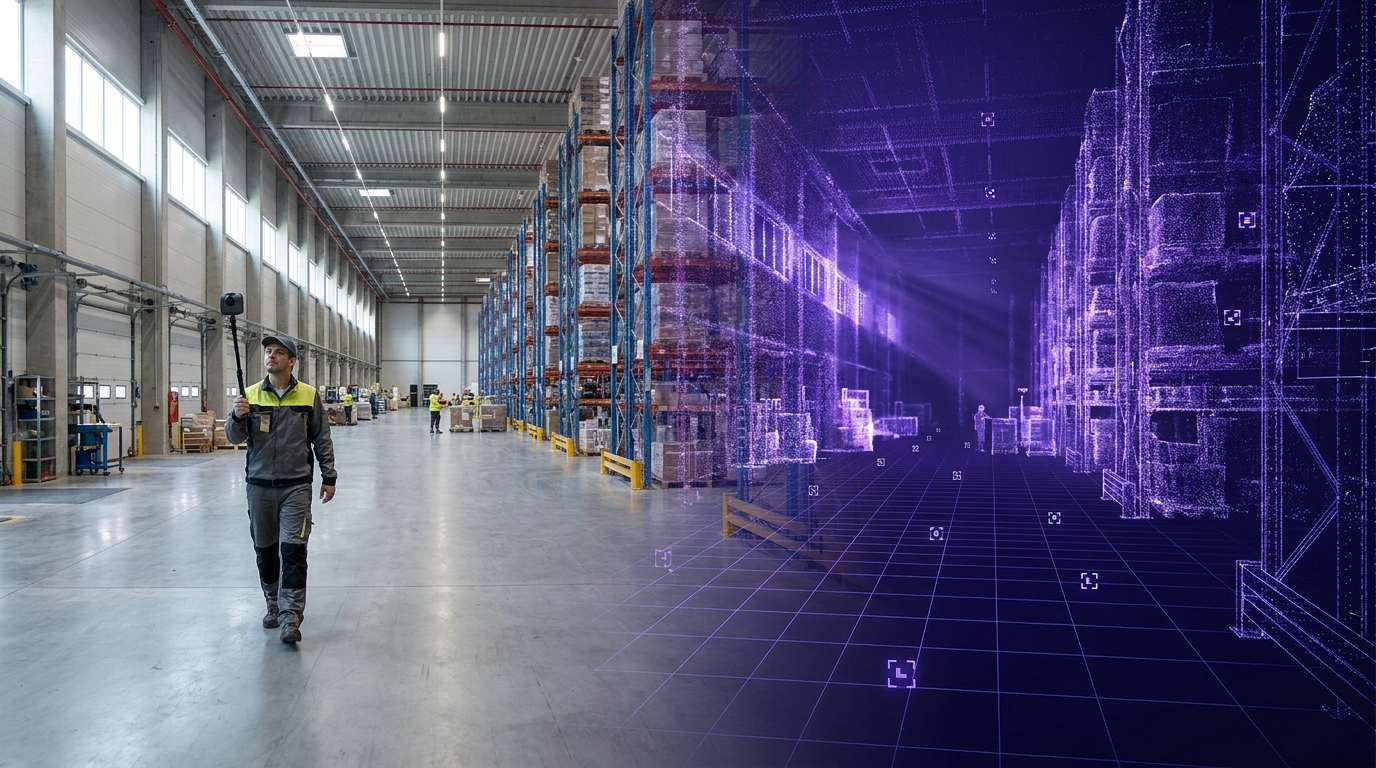
That precision matters beyond café corners. Think warehouse pick-paths, surgical-suite device placement, or museum tours where AR overlays must stay put for hours.
Remember when video editing required a desktop workstation? Mobile AR authoring is following a similar liberation curve.

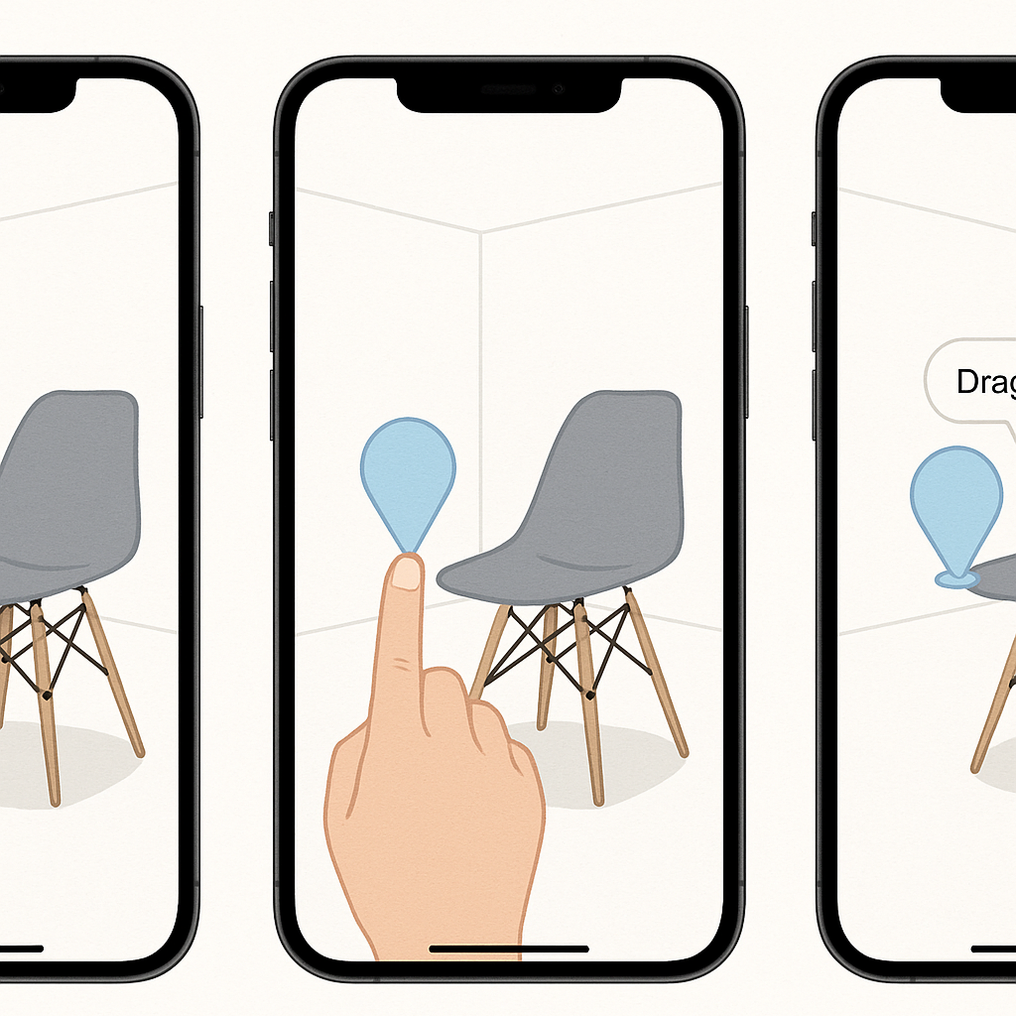
Inside Content Space, every asset feels like a tactile block you can nudge or spin. Want to animate your logo? Tap timeline. Need AR content placement that triggers at 8 a.m.? Set a schedule and move on.
No round-trip to a web CMS, no device-type guesswork. Because the Mapper app doubles as an ar content cms iphone, what you see is literally what end-users get.
Here’s a question that popped up immediately after my café demo: “Cool for small spaces—but can it grow?”
Enter MapSet stitching. Any new scan you capture can merge seamlessly with existing spatial data, like adding hex tiles to a board game. Five rooms become one interactive layout without breaking anchors.
We tried it in a 12 000 m² fulfillment center:
At each step, shareable links remained stable, content layers persisted, and navigation samples still hit that sub-10 cm sweet spot. Scaling to 50 000 m² is less about technical limitation and more about your team’s legwork.
No-code tools shine at velocity, but enterprise rollouts often want deeper integrations - custom shaders, analytics hooks, or cross-platform deployment. Content Space keeps escape hatches open:
Think of Content Space as a springboard: quick AR PoC kit today, extensible blueprint tomorrow.
Curious minds love numbers, so let’s compare a traditional mapping-to-prototype journey with the 10-minute sprint.
Even if hourly developer rates stay modest, we’re talking thousands in reclaimed engineering time - before you factor opportunity cost. And in today’s budget-squeezed climate, speedy validation is often the difference between green-light and goodbye.
Retail Pop-Up
A sneaker brand mapped a 40 m² booth at Fashion Week, layered AR size guides on each shelf, and pushed real-time drops to visitors’ phones—all set up during booth assembly the night before.
Industrial Training Lab
Maintenance leads at a turbine plant scanned a demo station and added animated service steps right on the control panel. Trainees carried iPads instead of printed manuals.
Museum Wing
Curators stitched three galleries into one spatial map and dropped voice-over hotspots next to four sculptures. Visitors simply scanned a lobby QR—no app installs, no wayfinding guesswork.
In every case, the pattern repeats: rapid ar prototype → quick stakeholder feedback → incremental expansion.
💡 Pro-tip: If you want that wow moment, pre-load a dynamic asset -like an animated coffee steam or sneaker explosion - so people see motion instantly.
Q1. How do I test VPS in 10 minutes if my Wi-Fi is shaky?A. Content Space processes locally first, then syncs. You can scan offline; publish when you’re back online.
Q2. Do I need Unity or Unreal at all?A. Not for prototypes or small pilots. Export only if you plan full-blown apps later.
Q3. Will this workflow function outdoors?A. Yes, provided the environment has enough distinct geometry (storefronts, trees). Direct sunlight can impact LiDAR range, so scan in diffuse light when possible.
Q4. How secure is my data?A. MultiSet offers enterprise-grade security with options for private cloud or self-hosted deployments. For casual tests, the default encrypted cloud works fine.
If you’ve been wondering whether location-based AR must be a multi-week slog, the evidence points to a cheerful “Not anymore.” No code AR authoring inside MultiSet Content Space flips the timeline - idea at breakfast, demo by lunch.
If you give this approach a spin, don’t be surprised when colleagues start asking how you stitched those drag and drop AR labels so precisely or where they can grab the same AR POC kit. Feel free to point them back here - then challenge them to build their own mini-experience using the same ar prototyping tool and shareable link. Every fresh scan adds another data point to the growing case that no code AR content placement can slash both cost and hesitation in equal measure. The faster we iterate, the quicker the world moves from occasional demos to everyday spatial experiences—and that’s a journey worth taking together.
Ready to try the 10-minute challenge?