Spatial Intelligence


In the fast-paced world of warehousing and logistics, efficiency and accuracy are paramount. Traditional navigation methods inside large warehouses often lead to delays, errors, and increased operational costs. Enter Augmented Reality (AR) indoor navigation - a cutting-edge technology that is revolutionizing how warehouse workers locate items, navigate complex layouts, and streamline their workflows. This blog post explores the transformative potential of AR indoor navigation from a warehouse perspective, offering practical insights and actionable recommendations for businesses looking to adopt this technology.
Warehouse AR navigation integrates augmented reality technology with indoor positioning systems to provide real-time, visual guidance within warehouse environments. Unlike GPS, which struggles indoors, AR navigation uses sensors, cameras, and spatial mapping to overlay digital directions onto the physical world through smart glasses or mobile devices.
Key Benefits of Warehouse AR Navigation
For example, a warehouse worker wearing AR glasses can see arrows projected onto the floor, guiding them directly to the correct aisle and shelf. This reduces guesswork and minimizes backtracking.

AR indoor navigation relies on a combination of hardware and software components tailored for warehouse environments:
Practical Example
Imagine a worker tasked with picking multiple items for an order. The AR system calculates the most efficient path through the warehouse, highlighting each item’s location in sequence. This reduces walking distance and picking time, boosting overall throughput.

While AR indoor navigation offers many advantages, warehouses must address certain challenges to ensure successful implementation:
1. Infrastructure and Hardware Costs
Setting up AR navigation requires investment in mapping technology, AR devices, and network infrastructure. However, costs have been decreasing as technology matures, and the return on investment (ROI) through efficiency gains often justifies the expense.
2. Accuracy and Reliability
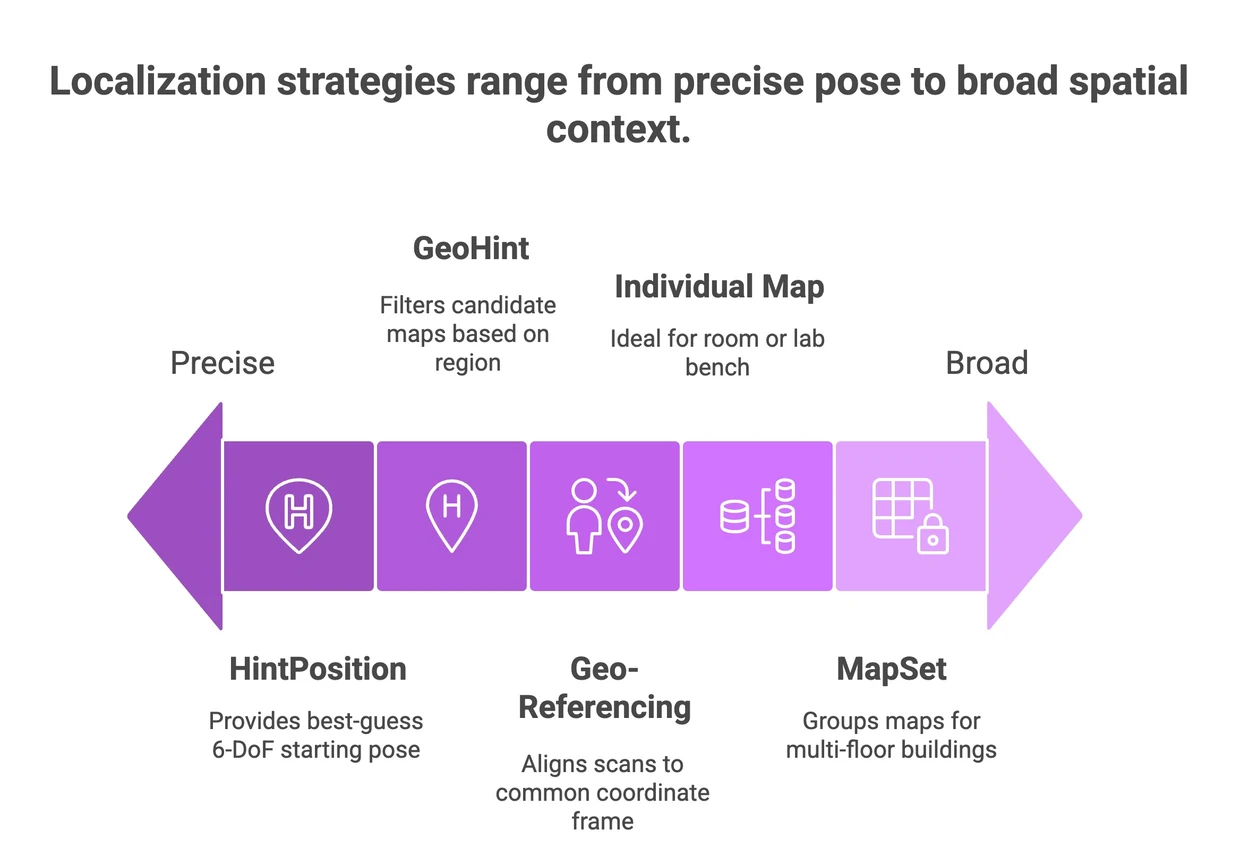
Indoor positioning can be affected by signal interference or complex layouts. Combining multiple localization methods and regularly updating digital maps can improve accuracy.
3. User Adoption and Training
Workers may initially resist new technology. Providing hands-on training and demonstrating clear benefits helps increase acceptance.
4. Integration with Existing Systems
Seamless integration with current warehouse management and inventory systems is critical. Choosing AR solutions with open APIs and customization options facilitates this process.
Recommendations for Smooth Implementation
For those interested in seeing AR indoor navigation in action, an AR indoor navigation demo warehouse offers a practical showcase of how this technology operates in real-world settings.
Several industries have successfully integrated AR indoor navigation to optimize warehouse operations:
E-commerce Fulfillment Centers
High order volumes and rapid turnaround times make efficient picking essential. AR navigation reduces picking errors and accelerates order processing, improving customer satisfaction.
Manufacturing Supply Chains
Just-in-time inventory management benefits from precise location tracking. AR helps workers quickly find parts and materials, minimizing production delays.
Cold Storage Warehouses
Navigating cold environments with bulky clothing is challenging. AR navigation provides clear visual guidance, reducing worker fatigue and errors.
Case Study Snapshot
A global logistics company implemented AR navigation in one of its warehouses and reported:

The future of warehouse AR navigation looks promising with ongoing advancements:
Businesses that adopt AR indoor navigation early will gain a competitive edge by improving operational efficiency and worker productivity.
AR indoor navigation is more than just a futuristic concept - it is a practical tool that can transform warehouse logistics today. By providing accurate, real-time guidance, AR helps reduce errors, speed up processes, and improve worker safety. Warehouses looking to stay ahead in a competitive market should consider integrating AR navigation solutions tailored to their specific needs.
To explore this technology firsthand, check out the AR indoor navigation demo warehouse and see how augmented reality is shaping the future of warehouse management.
By embracing AR indoor navigation, warehouses can unlock new levels of efficiency and accuracy, paving the way for smarter, more agile supply chains.